Words I know
Everything you have learned so far. Open it any time — yes, mid-question.
Hiragana · ひらがな
The 46 basic sounds, in the order every chart in Japan puts them.
Read a row left to right: a i u e o. Every one of them is a single clean
vowel — Japanese has five, and they never slide into another sound the way English
ones do.
Two you will trip on
は is ha — except when it is the topic particle, where it is
said wa. を is written wo and said o.
The game accepts either spelling for both.
About Japanese
Five things that explain most of what looks strange at first.
Three alphabets, one language
Hiragana は・を・です — native words and all the grammar.
Katakana コーヒー・ホテル — foreign words, which is most travel vocabulary.
Kanji 山・茶 — meaning-blocks borrowed from Chinese. Romaji is
just Japanese written in our letters, which is how you type here.
The verb goes last
Order is subject, then object, then verb. おちゃをのみます
is literally tea — [object] — drink. Once you expect the verb at the end,
long sentences stop feeling scrambled.
Particles do the work word order does in English
Little words that come after a word and label its job in the sentence:
は topic, を object, に destination,
で where it happens. Move them and the meaning moves.
See the Cheat sheets tab.
Less bookkeeping than English
No a or the. No plural — one cat and nine cats are both
ねこ. Verbs do not change for I / you / she. What you do have is
counters: the word for "two" changes with the shape of the thing counted.
Politeness is a dial
The same sentence exists at several levels of formality. The
〜です/〜ます level is the polite everyday setting that works
with strangers, shopkeepers and people you have just met — it is what this game
teaches, and the level the tutor will correct you back to.
Pitch, not stress
English leans on a syllable (ba-NA-na). Japanese keeps every syllable
the same length and moves the pitch instead. Say each beat evenly and you
will already sound closer than most learners.
Hints, tips & tricks
How to get the most out of the journey.
Say it out loud before you type it
The tutor grades what you write, but the point is what you can say. Speaking it
first catches the long vowel in arigatou that your fingers would skip.
Spelling is not the test
You type in our alphabet, and the tutor forgives the choices nobody agrees on:
arigatou or arigato, ocha o kudasai or
ocha wo kudasai, wa or ha. What it will not wave through
is the wrong particle, the wrong word, or dropping to a politeness level
that would be rude in the situation — those are real mistakes and it will say so.
One correction at a time
If three things are off, you get the one that matters most. That is deliberate.
Fix that one, and the others usually go with it.
The English disappears on purpose
Early on you get the Japanese, the romaji and a full translation. As your record
builds, the romaji goes, then the translation thins to corrections only. It is not
a setting — it moves on evidence you have banked over several stops, and it hands
the support straight back if you have a bad run or come back after a long break.
When you are stuck
- Open Words I know from this rail — it works mid-question.
- Answer anyway. A wrong answer costs you nothing and teaches the tutor where you are.
- Re-read the stop's About this place photo card. Words stick to places.
Little and often
Ten minutes a day beats two hours on a Sunday, and the streak counter is there to
make that visible. Nothing is locked, so on a tired day just replay a stop you have
already cleared.
Wander if you want to
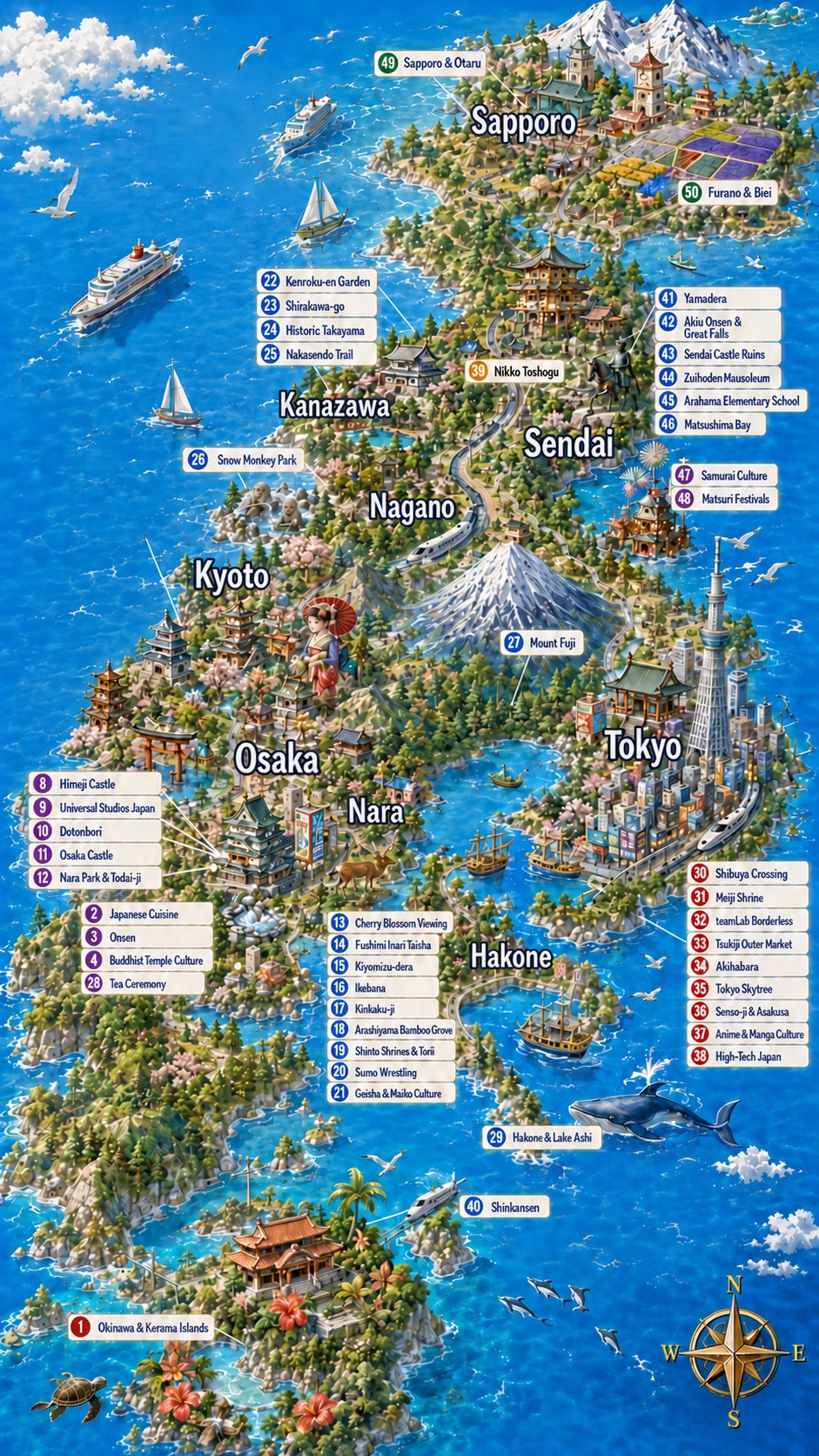
All fifty stops are open from the start. Jump to Hokkaido on day one if that is
what you feel like — but know that practice questions are built from words you
already know, so an early jump gives you thinner review. The journey in order is
the richer route.
FAQ
How the game itself works.
Do I need a Japanese keyboard?
No. You type in the English alphabet and always will. Kana only ever appears for
you to read, which needs no keyboard at all.
Do I have to do the stops in order?
No. All fifty are open. The map still suggests the next one and marks it
You are here, and the route line traces the unbroken journey you have
actually walked — so clear stop 40 early and it turns green on its own, while the
line stays where your continuous run got to.
What are points, XP and levels?
Clearing a stop for the first time pays its full reward. Replaying one you have
already cleared pays a small practice rate instead — you are welcome to practise
as much as you like, it just does not pay twice. XP raises your level.
And the coins?
Fifty ancient coins, one struck for each stop, each stamped with a kanji you earned
there. A coin is yours the first time you clear its stop, and it cannot be lost.
Points are the running score; the coins are the collection.
What is the streak?
Consecutive days you have played. It is the only number here that rewards showing
up rather than being right.
Can more than one person play?
Yes. The name at the top of the page opens the player list — switch between
players, or add a new one with their own name and their own interests, which the
tutor uses to pick what it talks about. Every player keeps their own level, points,
streak, coins and words, entirely separate from everyone else's.
Can I start over?
Yes. Open the player menu and choose Start over. It clears that player's
level, points, streak, all fifty coins and every cleared stop, and puts them back at
the first stop with nothing learned. It only ever affects the player you are signed
in as — nobody else's progress moves.
Is my progress saved?
Yes. Your points, level, streak, cleared stops and every word you have met are
remembered between sessions, along with how often you got each word right — which
is what decides how much support the tutor gives you.
What do the rings on the map mean?
- Green ring and a tick — cleared.
- Pulsing red ring — the journey's suggested next stop.
- Gold glow — whatever you are pointing at.
- White ring — the stop the panel on the right is showing.
What happens if I get an answer wrong?
You are told what was off and you move on. Nothing is deducted and nothing locks.
Getting it wrong is how the tutor learns to keep the training wheels on.
Why is a stop's photo card there?
Because vocabulary sticks to places far better than to lists. Opening it never
costs anything and never starts the lesson.
Cheat sheets
The four cards worth keeping open.
Particles
- は wa — as for… (the topic). わたしはアリソンです
- が ga — the subject, especially new information
- を o — the thing the verb acts on. おちゃをください
- に ni — to, at, on: a destination or a point in time
- で de — where an action happens, or what you do it with
- へ e — toward. Softer and vaguer than に
- の no — of, 's. にほんのりょうり
- も mo — too, also
- か ka — put it last and the sentence becomes a question
Numbers & counters
- 1–5 いち に さん よん ご ichi ni san yon go
- 6–10 ろく なな はち きゅう じゅう roku nana hachi kyuu juu
- Counting things: ひとつ ふたつ みっつ hitotsu futatsu mittsu
- Counting people: ひとり ふたり さんにん hitori futari sannin
- Counting cupfuls: いっぱい にはい ippai nihai
Which counter you use depends on the shape of the thing. Point and say
ひとつ if you are stuck — it is understood everywhere.
Greetings
- おはようございます ohayou gozaimasu — good morning
- こんにちは konnichiwa — hello, daytime
- こんばんは konbanwa — good evening
- ありがとうございます arigatou gozaimasu — thank you
- すみません sumimasen — excuse me / sorry / to call someone over
- いただきます itadakimasu — said before you eat
- ごちそうさまでした gochisousama deshita — said after
- おやすみなさい oyasuminasai — good night, going to bed
Survival phrases
- これをください kore o kudasai — this one, please
- いくらですか ikura desu ka — how much is it?
- トイレはどこですか toire wa doko desu ka — where is the toilet?
- わかりません wakarimasen — I don't understand
- もういちど、おねがいします mou ichido, onegaishimasu — once more, please
- だいじょうぶです daijoubu desu — it's fine, I'm okay
- おすすめはなんですか osusume wa nan desu ka — what do you recommend?
- えいごをはなせますか eigo o hanasemasu ka — do you speak English?